
PENDAFTARAN NOMBOR
PLAT
KENDERAAN
DI MALAYSIA
Teringat masa penulis masih belajar di sekolah rendah dulu, bila berjalan ke pekan
dan bandar suka berlumba dengan abang penulis perihal nombor plat kereta. Menghafal
plat dari negeri mana itu satu hal, beradu nombor negeri sudah sampai angka berapa.
Masa penulis di Darjah 6 sekolah rendah (awal tahun 1970an), pendaftaran kenderaan
di Negeri Johor baru sampai JH. Masa itu Selangor agak jauh di hadapan, mungkin
BBS atau BBT. Negeri-negeri seperti Kelantan, Terengganu, Pahang, Negeri
Sembilan dan Melaka masih di tahap antara A hingga C sahaja. Perlis masih satu
huruf R belum memulakan RA pun.
Hari ini penulis ingin menurunkan ilmu dari Tok Guru Wiki berkaitan sejarah dan perkembangan nombor pendaftaran kenderaan di Malaysia.
A standard Peninsular Malaysian number plate, registered in
Penang and affixed on a dealership plate frame.
Plat pendaftaran kenderaan di Malaysia dipamirkan di bahagian hadapan dan belakang kenderaan awam, peribadi dan komersil mengikut syarat dan peraturan yang ditetapkan oleh Undang-undang. Pengeluaran nombor plat kenderaan adalah bidangkuasa Jabatan Pengangkutan Jalan
Malaysia (JPJ). JPJ sebelum ini di kenali sebagai Registrar and Inspector
of Motor Vehicles (RIMV).
Reka Bentuk Plat
The current standard for Malaysian number plates were
originally derivatives of pre-1932 number plate formats in the United Kingdom,
first issued after the introduction of motorised vehicles in the 1900s during
British rule. Number plates are typically issued and are formatted similarly
for any motorised vehicle that runs on rubber tyres, including most road-legal
private, commercial and industrial vehicles, motorcycles, emergency vehicles,
and selected heavy equipment (such as agricultural tractors, truck-mounted
cranes and backhoe loaders). With the exception of those issued for taxis,
vehicle dealers and diplomats, all vehicle number plates in Malaysia have white
characters on black plates for both front and rear plates, regardless of the
vehicle type.
Standards for number plate designs have been defined by the
JPJ but are only practiced to an extent. Character size, layouts, and colour
use are more strictly enforced for accurate identification and optimum
visibility. However, the dimensions of the plates displaying the license number
are more loosely enforced. While many vehicles display plates in regulation
dimensions or are housed in dealer plate frames with standardised dimensions,
some license plates are outlined to precisely fit into vastly larger recessed
spaces holding the rear license plates, or appear with reduced or custom
dimensions where no proper alcoves exist, as commonly practiced on the front
fenders and fairings of most motorcycles and the front of sports cars.
A compact version of Arial Bold is currently the typeface
preferred by the Road Transport Department and is thus the most commonly used,
but other easy-to-read typefaces are generally acceptable. Common alternative
choices include Charles Wright, which has been used on Singaporean, Hong
Kongese, and British plates, and FE-Schrift, which is used on German plates and
is thus popular among Malaysian owners of cars with European marques,
especially German models. More obscure custom typefaces have also been known to
be used primarily on grey import vehicles and aftermarket license plates.
Early Malaysian number plates were made of pressed metal,
but were largely superseded by plastic plates since the 1970s, with characters
either printed on or molded in plastic pieces.

Standard Number Plate (Measurement) Semenanjung Malaysia
Semenanjung Malaysia
With the exception of Kuala Lumpur, Putrajaya and Langkawi
plates, and taxis, vehicle dealers and diplomats, all Peninsular Malaysian
number plates for private and commercial tyre motor vehicles with the
exceptions of those used by taxis, vehicle dealers and diplomats follow a SXX
#### algorithm.
S - The state or territory prefix. (e.g. : W = Kuala
Lumpur, A = Perak, B = Selangor, P = Penang)
X - The alphabetical sequences. (e.g. : A, B, C ... X, Y)
# - The number sequence. (e.g. : 1, 2, 3 ... 9998, 9999)
The exceptions in the algorithm are as follows:
There can be no leading zeroes in the number sequence.
The letters I and O are omitted from the alphabetical
sequences due to their similarities with the numbers 1 and 0.
The letters Z is omitted and reserved for use on Malaysian
military vehicles.
The algorithm started with a state prefix and a number
sequence which ranged from 1 to 9999. For example, P 1 would be the first
registration plate of Penang. Once P 9999 was achieved, an alphabetical
sequence was added to the right of the state prefix; PA 1 was the result. When
PA 9999 was reached, the number sequence was reset and the alphabetical
sequence progressed; PB 1 being the outcome. After PY 9999 was achieved, a
second alphabetical sequence was added to the right of the first alphabetical
sequence; PAA 1 being the outcome. When PAY 9999 was reached, the second
alphabetical sequence was reset and the first alphabetical sequence progressed;
resuming at PBA 1.
PENDAFTARAN PLAT KENDERAAN DI SEMENANJUNG


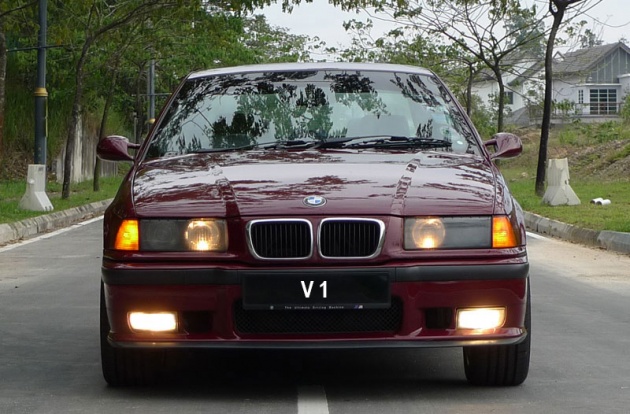
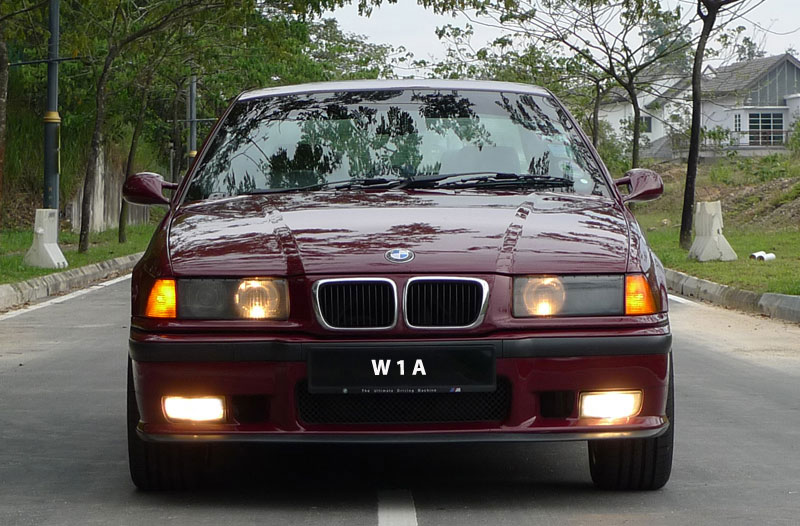
Varians
As the most registered number plate series in the country,
the W series' traditional 7-character format became the first in Peninsular
Malaysia to be exhausted when WYY 9999 was reached on 26 September 2013. To
allow further W plates, the algorithm was altered to feature an alphabetical
suffix behind the number sequence, resetting at W 1 A. When W 9999 Y is
achieved, the second alphabetical sequence will re-emerge between the state
prefix and number sequence, leading to WA 1 A. When WA 9999 Y is met, the first
alphabetical sequence will reset and the second alphabetical sequence will
advance, giving WB 1 A. When WY 9999 Y is reached, a third new alphabetical
sequence will be spliced into the algorithm, between the second alphabetical sequence
and number sequence, resulting in WAA 1 A. The series will end when WYY 9999 Y
is reached. The new format would theoretically allow a vastly larger number
of registered plates, better addressing the risk of exhaustion of numbers, but
is also subject of conflicts with a certain series of Singaporean license
plates (see Malaysian vehicles in Singapore)
WA XXXX A format are very popular in Johor especially Johor
Bahru due to similarity to Singaporean Engineering vehicles registration
series.
Nombor Plat V
On 18 May 2016, less than three years into the
implementation of the extended W series, the Transport Ministry, on the request
of the Road Transport Department, announced the tentative retirement of the W
series in place of a new V series that would revert to the regular SXX ####
format. The decision was made in response to massive declines in bidding for
extended W series plates especially motorcycles (Selangor B registration
gaining traction for motorcycles) as the public was gauged to favour a SXX ####
format over Kuala Lumpur's SXX #### X format. The V series has launched on 1
October 2016 after completion of WD 9999 F and the extended W series will be
decommissioned. Since V series introduced, Bidding price increased
significantly and lots of motorcycles are registered on V instead of B.
No. Plat KV
Vehicles in Langkawi, a Kedahan resort archipelago, are
issued KV series plates after the islands achieved duty-free status. The
algorithm for Langkawi is KV #### X, where KV is the territory prefix with #
and x denoting the number and alphabetical sequences respectively. Prior to the
KV series, Langkawi-registered vehicles were issued with K series plates as is
with the rest of Kedah.
Batasan Penggunaan Suffix Q atau S
A quirk of both the KV series and present Sabahan plate
format is the restriction of the use of Q or S as the suffix, justified by
possible conflicts with specific older East Malaysian number plates ending with
Q or S, specifically the Sarawakian XX #### Q format used between 1988 and
1991, and Sabah's early post-independence X #### S format; measures, however,
have been taken to restrict the use of the old Sabahan format to accommodate
the W series' use of disused Sabah x #### S numbers. Similar restrictions may
be applied for future extended plates for the Johor, Selangor, Kedah and
Malacca series due to overlaps with plate formats for Kota Kinabalu (J #### S),
Betong/Sri Aman (B #### Q), Kuching (K #### Q), Miri (M #### Q) and Beaufort (B
#### S).
Pendaftaran Nombor Siri F Putrajaya
Following the founding of Putrajaya in 1995, vehicle license
numbers registered in the territory, in a fashion similar to commemorative
vanity plates, originally had their territorial prefix incorporating the name
of the territory stylised in oblique Calisto followed by a number sequence of
up to four digits (Putrajaya xxxx. The Putrajaya format did not incorporate
additional identifiers beyond the four-digit number, limiting the number of
available plates for the original Putrajaya series to 9,999 vehicles.
In response to the restrictive format the Road Transport
Department began to issue F prefix plates (denoting "Federal") for
new Putrajaya-registered plates effective June 1, 2016.
SEJARAH NOMBOR PENDAFTARAN
SEMENANJUNG MALAYSIA
Sebelum 1948
The registration plate system in Malaysia traces back to
the introduction of motor vehicles in the early-1900s in colonial British
Malaya, with the introduction by respectable state governments of a basic S
#### format, where S prefix is the state identifier. Because the S #### format
were not expected to be exhausted for a considerable time, state identifiers
were allowed to be represented by one or two letters.
Negeri-Negeri Selat
Registration plates of Straits Settlements before 1948.
Number plates for the Straits Settlements began to be issued in the
early-1900s. With the exception of several format changes in intermediate
periods, most of the Straits Settlements state identifiers continue to be used
by the territories they were originally assigned to.
The Straits Settlement of Malacca was assigned with the M
state identifier, which has continuously been issued to vehicles registered in
the state since its introduction over a century ago. The Straits Settlement of
Penang originally had two plate series, P and W, which were assigned
respectively to Penang island and the mainland territory of Province Wellesley.
The Province Wellesley W series was discontinued in 1957 as P plates would be
issued for both territories henceforth.
The S series was assigned to the Straits Settlement of
Singapore, which continuously used the basic S #### format for several decades
until the format was nearly exhausted and subsequently expanded to SX ####
after rationalisation in 1948. Following Singapore's expulsion from Malaysia in
1965, the S series is no longer administered by the Malaysian Road Transport
Department, and fell under the responsibility of the State of Singapore
Registry of Vehicles and its successor, the Land Transport Authority; vehicles
with Singaporean S plates that were under Malaysian ownership were reissued
with corresponding Malaysian number plates. In the years following expulsion,
the Singaporean number plate system evolved independently with changing prefix
systems since 1972, culminating to the reintroduction of the S series for
private cars in 1984, the inclusion of a fourth checksum letter, and varied
colour schemes for different classes of vehicles.
The L series began to be issued to Labuan in 1906, a
then-independent island outpost off the coast of British North Borneo under the
British North Borneo Company that would later become part of the Straits
Settlement in the following year. The L plate was discontinued in 1963 after
the island (now part of North Borneo/Sabah) was reformatted in accordance to
North Bornean/Sabahan conventions, and would remain unused until after Labuan's
status as a Federal Territory in 1984, when the L series was reinstated for the
island.
Negeri-Negeri Melayu Bersekutu dan Tidak Bersekutu
Registration plates of the FMS and UMS before 1948. Due to
the initial simplicity of the S #### format, plates in the Federated Malay
States (FMS) (Perak, Selangor, Negri Sembilan and Pahang) and Unfederated Malay
States (UMS) (Johore, Trengganu, Kelantan, Kedah and Perlis) originally follow
distinct series of state identifiers which may use one or two letters (i.e. SL
and KN for early plates in Selangor and Kelantan, respectively).
In conjunction with the formation of the Federation of
Malaya, rationalisation of Malayan state identifiers was conducted in 1948 to
simplify all FMS and two-letter UMS prefixes into single letters. In addition,
the Pahang plate, which originally assumed the P prefix and was allowed to
conflict with the Penang plates for decades, was finally reassigned with a
unique letter. Like the pre-1932 number plate designs in the United Kingdom,
the order of the new prefixes also denoted the order of population size of the
FMS states at the time, with Perak's A series representative of its then larger
population ahead of Selangor (B) and Pahang (C). To prevent future conflicts
with plates with the SX #### format, pre-1948 plates with two-letter state
identifiers were subsequently required to be replaced with plates using
replacement one-letter identifiers (i.e. PK 1234 to A 1234 and JB 1234 to J
1234), leading to the extinction of the use of double-letter state identifiers
in Malaya; a similar change was imposed on pre-1948 Pahang plates. Remaining
single-lettered UMS and Straits Settlement identifiers were not subjected to
the 1948 change.
Post-1948. Following the rationalisation of prefixes in
1948, new plates registered in Malaya (and then Peninsular Malaysia) bear a SX
#### format, which was sufficient for use through the 1950s and 1960s. By the
1970s and 1980s, the SX #### format began to reach its limit in states with
higher numbers of new vehicle registrations, leading to an inclusion of a third
identifying letter,the new SXX #### format. Selangor becomes the first state in
Peninsular Malaysia to adopt the new format in 1971, followed by Johore in
1978, Kuala Lumpur in 1980, Perak and Penang in 1981, Pahang and Negeri
Sembilan in 1988, Kedah in 1991, Malacca in 1993, Kelantan in 1995,and
Terengganu in 2000. Perlis remains the only Peninsular state which has not
exhausted its original Sx #### series.
In 1974, W series plates began to be reissued for cars
registered in the newly ceded Federal Territory of Kuala Lumpur. To prevent
conflicts with pre-1957 Province Wellesley plates, the Kuala Lumpur series
started at WA 1 as the Province Wellesley series never exhausted the W 1-to-W
9999 range. As Kuala Lumpur was previously the capital of Selangor, vehicles
registered there before 1974 are permitted to continue carrying the B series plates.
Being in the economic heart of post-war Malaya and early
Malaysia, Selangor's B series was historically the most commonly registered
series in the country for decades before it was surpassed by Kuala Lumpur's W
series in the mid-1990s (caused by majority motor vehicle dealer's registering
new vehicles at Wangsa Maju RTD/JPJ) and the Johor's J series in 2005 (Caused
by massive Malaysians finding employment in Singapore and commuting between
Malaysia and Singapore by motorcycle mostly registered in Johor).
The V series plate of Kuala Lumpur,which replaces its
predecessor W plates in October 2016,will become most recent registration
plates to reach SXX #### format somewhere in 2017,seventeen years after
Terengganu lastly reached this format in 2000.
The vast majority of vehicles sold in Malaysia are now
registered in the Peninsular. At the end of 2012, a total of 22,702,221
vehicles, including motorcycles, have been registered with the Malaysian Road
Transport Department. Of that figure, 5,320,562 vehicles have been registered
in Kuala Lumpur alone, with 3,332,767 units being privately registered,
four-wheeled vehicles such as MPVs, SUVs, pick-ups and passenger cars.
Additionally, a further 1,312,016, 1,226,223 and 1,052,353 four-wheeled
vehicles have been privately registered in Johor, Penang and Selangor
respectively.[6] Collectively, the four states account for 8,911,154 privately
registered, four-wheeled vehicles in Malaysia by the end of 2012. In
comparison, 1,465,078 and 1,026,867 vehicles, including
non-privately-registered and non-four-wheeled vehicles, have been registered in
Sarawak and Sabah respectively.
Booked prefixes/highest-bidding plates
Unique prefixes of plates such as repeated letter (XXX)
become the most bidded issued plates, started with BBB issued in 1978, AAA in
1981, JJJ in 2005, CCC in 2007, and WWW in 2012; DDD will be issued somewhere
in 2017 and RR will be issued some around in 2018. The most expensive plates as
of 2016 is "F 1" which bid at RM836,660, "W 1 N" (similar
to "Win") at RM748,000 in 2014 and "WWW 1" at RM520,000 in
2012,both owned by Sultan of Johor which is previously bid the "JJJ
1" plate at RM165,000.
In November 2014, plate prefix "BMW" series
issued and open for bidding which very popular among BMW owners. "BMW
1" and "BMW 2" were reserved for Selangor Royal Family.
"BMW 6" owned by national badminton player Lee Chong Wei.
In February 2015, plate prefix "RM" issued in
Perlis open for bid, which is similar to Malaysian ringgit currency symbol.
"RM 1" plate was reserved to Raja Perlis, Tuanku Syed Sirajuddin when
"RM 2" to "RM 7" except "RM 5", which belongs to
Tengku Amir Shah, Raja Muda (Crown Prince) of Selangor, was reserved to Perlis
state EXCO's. "RM" becomes highest-bidding serial plate at more than
RM7 million.
In July 2016,plate prefix "F 1" issued in
Putrajaya was bid at RM836,660,again by Sultan of Johor.The "F 1"
plates,are similar to Formula One acronyms.
Another special prefixes is plates which similar to
Malaysia's political party acronyms, such as MCA, PAP, DAP, PAS, PKR and PKM
and "MM 1", which belongs to former Prime Minister Mahathir Mohammad.
MCM prefix are popular on Malaccan government due to MCM denotes Malacca Chief
Minister and acronym of state's official name such as JDT stands for Johor
Darul Takzim and KDA stands for Kedah Darul Aman.
Sarawak
Current format: QAA 4530 H
All registration plates of Sarawak for private and
commercial motorised vehicles with the exceptions of those used by taxis,
vehicle dealers and diplomats follow a QDx #### x algorithm.[2]
Q The constant
prefix for all Sarawakian number plates.
D The division
prefix. (e.g. : A = Kuching, M = Miri)
X The
alphabetical sequences. (e.g. : A, B, C ... X and Y)
# The number
sequence. (e.g. : 1, 2, 3 ... 9998, 9999)
The letters I, O and Z are not used and there are no
leading zeroes, as in the case of the Peninsular Malaysian number plates. The
current algorithm for the majority of Sarawak's divisions start with the
constant Q prefix, followed by the division prefix and the number sequence. An
example would be QA 1 of Kuching Division, which was issued in 2004. Once QA
9999 was reached, an alphabetical sequence was added to the right of the
division prefix; QAA 1 was the result. When QAY 9999 was achieved in late 2011,
a second alphabetical sequence was incorporated and served as the suffix; the
result was QAA 1 A. When QAA 9999 Y is met in the near future, the second
alphabetical sequence will be reset and the first alphabetical sequence will
advance; QAB 1 A will be the outcome.
Since 2011, several more divisions have exhausted their respective
QDx #### formats. In July 2013, Sibu and Mukah Divisions began issuing QS ####
x plates after QSY 9999 was reached. This is followed by Miri Division, which
began using the QM #### x format since 20 August 2015, after QMY 9999 was
reached. Since 19th May 2016, Deputy Minister of Transport introduced V for
Kuala Lumpur, There is a possibility for Kuching, Sibu and Miri division
current algorithm number plates will to be replaced by reintroduced unused
letters to ensure suffix-less number plate is used.
Sarawak registration plates especially QAA, QS and QM are
commonly seen and very popular in Johor especially Johor Bahru due to
similarity to Singaporean QX and QY registration series.
Pendaftaran Plat Kenderaan di Sarawak
QA Kuching
QK Kuching
QB Sri Aman and
Betong
QC Samarahan
QL Limbang
QM Miri
QP Kapit
QR Sarikei
QS Sibu and Mukah
QT Bintulu
The government of Sarawak equip their vehicles with the
unique QSG prefix.
Sejarah Pendaftaran Nombor Kenderaan di Sarawak
Pre-1991. Before the formation of the Federation of
Malaysia in 1963, the Sarawak's vehicle number plates were originally
distinguished only by NDX (N = Number, D = Division, X = Alphabet) prefixes
which represented the then five Administrative Divisions in Sarawak, followed
by a number sequence which ranged from 1 to 9999; an example would be 1DX ####
for the 1st Division, present-day Kuching Division.
Registration plates of Sarawak (Pre-1980s). During the
1970s, Sarikei Division and Kapit Division were formed and split from the 3rd
Division to become the 6th and 7th Divisions, and were therefore assigned the
6D and 7D prefixes respectively. By the 1980s, the original 1D and 5D prefixes
had been gradually exhausted with the passing of time and were eventually
replaced by single-lettered prefixes similar to that of Peninsular Malaysia.
The 6D and 7D prefixes continued to be used well into 1991.
Registration plates of Sarawak (Post-1980 –1991). However,
the Sarawakian number plates prefixes conflicted with that of several states in
Peninsular Malaysia, Brunei and Singapore. For example, the K prefix for
Kuching Division in Sarawak conflicted with the K prefix for Kedah in
Peninsular Malaysia and Kuala Belait in Brunei. In response, the Malaysian Road
Transport Department amended vehicle registration plate regulations in 1988 by
introducing a constant suffix Q for all Sarawakian number plates; an example would
be KX #### Q for Kuching Division.
Post-1991. In 1991, a new format was adopted in which the
suffix Q was moved to the front of the sequence in all Sarawakian number
plates. The result is QK 1 which extended to QKY 9999. When the change took
place, the SG prefix for Sarawakian government vehicles had been exhausted and
an x was later placed in front of the Q suffix, resulting in a format that read
SG #### XQ. Kuching Division registration plates were the most numerous in
Sarawak and the KT #### Q series was issued halfway when the new QK prefix was
enforced. The QA prefix later replaced the QK prefix for Kuching Division.
Sabah
Current format: SAB 9402 K
A Sabahan number plate. All registration plates of Sabah
(except Labuan) for private and commercial motorised vehicles with the
exceptions of those used by taxis, vehicle dealers and diplomats follow a SDX
#### X algorithm.
S The constant
prefix for all Sabahan number plates.
D The division
prefix. (e.g. : A = West Coast, T = Tawau)
X The alphabetical
sequences. (e.g. : A, B, C ... X, Y, except Q & S are restricted for use)
# The number
sequence. (e.g. : 1, 2, 3 ... 9998, 9999)
Letters I, O, and Z are not used and there are no leading
zeroes, as in the case of the Peninsular Malaysian number plates. Q and S are
restricted from being used in the suffix to minimise confusion with the
Sarawak's 1988–1991 Sibu SX #### Q series, and Sabah's early post-independence
X #### S format.
The current algorithm for the majority of Sabah's divisions
start with the constant S prefix, followed by the division prefix and the
number sequence. An example would be SA 1 of West Coast Division. Once SA 9999
was reached, an alphabetical sequence was added and served as the suffix; SA 1
A was the result. When SA 9999 Y was achieved, a second alphabetical sequence
was placed to the right of the division prefix and the first alphabetical
sequence was reset; the result was SAA 1 A.When SAA 9999 Y was met, the second
alphabetical sequences,SAB 1 A was the outcome.
Despite measures to minimise conflicts with similar number
plate formats, a number of vehicles in Sabah will bear exactly the same number
plates to a number of private vehicles registered in Singapore due to the
complicated history of its plate's algorithm and arrangement of the characters.
In Singapore, letter Z are allowed to use and different colours are issued such
as OPC number plate (white on red background), whereas Z are reserved for
military vehicles in Malaysia. With the allow the usage of letter Z for
Singapore number plates (suffix F, N, Q, V and W not used on Singapore number
plates), only cars in Singapore bears S and OPC scheme number plate which bears
white on red background plates, it minimises the confusion of Sabah and
Singapore number plates.
Sabah registration plates are very popular and commonly
seen in Johor especially Johor Bahru due the similarity to Singaporean private vehicle
registration plates.
On May 19th 2016, Deputy Minister of Transport introduced V
prefix for Kuala Lumpur, there is a possibility that current Sabah format will
be replaced by a new prefix to ensure that current Sabah number plates bears no
suffix compared to current format.
Historically Sabah used E series which the E series bears
no suffix, which is similar to number plate algorithm in Peninsular Malaysia.
Pendaftaran Plat Kenderaan di Sabah
SA Pantai Barat
SAA Pantai Barat
SAB Pantai Barat
SAC Pantai
Barat
SB Beaufort
SD Lahad
Datu
SG Sabah
Government
SK Kudat
SL Labuan
(replaced)
SS Sandakan
ST Tawau
SU Keningau
The West Coast Division encompasses the densely populated
cities of Kota Kinabalu and Penampang. The SA series has thus become the most
numerous number plate prefix in the state of Sabah. It is also the only Sabahan
prefix to have two alphabetical sequences.
WP Labuan. Labuan, a Federal Territory based on a former
Sabahan territory, uses a standard L series based on the Peninsular Malaysian
algorithm, unlike the other Sabahan divisions. Eg: LE 2861.
Sejarah Pendaftaran Nombor Kenderaan di Sabah
Pre-1980s. Historically, number plate formats for Sabah,
then known as North Borneo prior to the formation of the Malaysian federation
in 1963, were similarly revised multiple instances. During Chartered Company
rule North Borneo number plates followed a similar format to that of Malaya,
but were defined by its own set of regional prefixes based on capitals of the
state's then current divisions. However, the old algorithm was quickly
exhausted as only combinations such as D #### were possible. Following World
War II and declaration of North Borneo as a British Crown Colony, an E was
added into the registration number prefix, with new registration numbers issued
as ED ####. Eg: EJ 1659 and T 1659 S.
After North Borneo's independence from British rule and
entry into the Malaysian federation, the E prefix was replaced by an S suffix,
altering the format to D #### S, likely as a response to avoid conflicts with
the Singaporean E to EZ series used between 1972 and 1984; the S suffix was
also added to avoid further conflicts with Peninsular Malaysian formats. The
Jesselton (J) division prefix was dropped in favour of an A prefix representing
the West Coast Division following Jesselton's renaming to Kota Kinabalu in
1967.
Labuan, which was part of the Straits Settlements and had
its own L series plates, fell under the jurisdiction of North Borneo and its
vehicle plate reformatted after 1946 in line with the state's number plate
formats (EL #### and L #### S).
Despite their obsolescence, delisted ED #### and D #### S
numbers, including those using the J division prefix, may still be registered
for new vehicles,[8][9] as it does not conflict with current number plate
formats in the rest of Malaysia or Singapore.
Post-1980s. From the early 1980s, new Sabahan vehicle
number plates were issued in the current SDX #### S format.
Following the format change, Labuan plates were issued with
the SLX #### S format until a format similar to its original Straits
Settlements format, LX ####, was reinstated in the mid-1990s following Labuan's
separation from the state in 1984 as an independent Federal Territory.
Specialised Plates
Taxi: HWE 1026
A Kuala Lumpur-registered "HW" taxi number plate.
Malaysian taxicab number plates follow a HSx #### algorithm.[10] While based on
the Peninsular Malaysian registration plates, taxi plates usually incorporate a
constant H (Hire) prefix and have inverted colours (black characters on white
background) for distinction purposes.[1]
H The constant
prefix for all taxi number plates.
S The state or
territory prefix. (e.g. : W = Kuala Lumpur, P = Penang)
x The alphabetical
sequence. (e.g. : A, B, C ... X, Y)
# The number
sequence. (e.g. : 1, 2, 3 ... 9998, 9999)
Registration plates of Malaysian Taxis (post-1980s)
HA Perak
HB
Selangor
HC Pahang
HD
Kelantan
HE Sabah
(replaced)
HJ Johor
HK Kedah
HL Labuan
HM Melaka
HN Negeri
Sembilan
HP Penang
HQ Sarawak
HR Perlis
HS Sabah
HT Terengganu
HW Kuala Lumpur
The Kuala Lumpur HW is thus far the most widely issued of
all the taxi prefixes, followed by Selangor's HB and Johor's HJ prefixes
respectively. Some taxis in Shah Alam use the HB #### SA format number plate.
LIMO 1130 W. The LIMO #### S format was introduced for
Kuala Lumpur International Airport (KLIA) limousines following the opening of
the airport in 1998. The LIMO prefix is a constant and is followed by the
number and state prefixes, such as LIMO 4430 W and LIMO 3864 B. The service of
the KLIA airport limousines largely cater to demand in Selangor and Kuala
Lumpur. Thus, only the B or W state prefixes are used.
Sejarah Nombor Pendaftaran Teksi
Pre-1980s taxi number plates shared the format used for
private vehicles based on the state of origin, but with the inversion of
colours (black characters on white background). The number plate was also
complemented by a Kereta Sewa (English: Rental Car) tag on the roof of taxis.
JCT 9896
This old format is widely used on rural taxis in less
developed states such as Kelantan and Pahang, but has been widely replaced by
the new HSX #### format in the highly developed states, namely Kuala Lumpur,
Selangor, Johor, Negeri Sembilan and Penang. However, taxi owners may still choose
to opt for either the pre-1980s or post-1980s number plates as both are
considered legal and valid. By the end of 2012, there were 39,384 taxis
registered in Kuala Lumpur.[6] A further 12,392 and 11,581 taxis were
registered in Johor and Selangor respectively.
Plat Kenderaan Diplomat
A Malaysian plate for a Yemenese diplomatic vehicle:
39-08-DC
The registration plates of diplomatic corps in Malaysia are
very distinct from other number plate formats in the country. They follow a
1C-2C-DC format and have either white characters on a red background or white
characters on a black background. Furthermore, leading zeroes are used in
addition to hyphens between the characters.
1C - The first code denotes the nationality. (see list
below)
2C - The second code denotes a rank. (e.g. : 01 = Head of
Mission's Official Car, 52 = Attaché)
DC - The constant suffix which denotes Diplomatic Corps.
[show]List of country codes on Malaysian diplomatic vehicle
registration plates
Consular Corps: 49-02-CC
The registration plates of consular corps in Malaysia
complement the number plates of the diplomatic corps. They follow a 1C-2C-CC
format and have white characters on a black background. Leading zeroes and
hyphens are also used.
1C - The first code denotes the nationality. (e.g. : 15 =
Australia, 23 = Netherlands)
2C - The second code which is dependent on a Malaysian
state and denotes a rank. (e.g. : 01 = Head of Consular Mission in Kuala
Lumpur, 02 = Head of Consular Mission in Penang)
CC - The constant suffix which denotes Consular Corps.
United Nations
Registeration No: 10-01-UN
Registration plates for vehicles registered under the
United Nations (UN) in Malaysia use a 1C-2C-UN format. These plates are issued
with white characters on a black background or white characters on a red
background.
1C The second code
denotes an organisation within the UN.
(e.g. : 10 =
United Nations Development Programme, 11 = World Health Organization)
2C The first code
denotes a rank. (e.g. : 01 = Head of United Nations Office Official Car, 04 =
Head of United Nations Office Personal Car)
UN The constant
suffix which denotes United Nations.
Other international organisations. 10-04-PA
A PA suffix is used for vehicles registered under other
international organisations in Malaysia. They follow a similar format to that
used for the diplomatic corps.
Pendaftaran Nombor Kenderaan Tentera
Eg: C 5010
For all motorised Malaysian Armed Forces vehicles
(including tracked vehicles and various armoured vehicles), number plates
numbers with the Z prefix are utillised. Issued in a ZX #### format with white
characters on a black background, there are no leading zeroes, and the letters
I and O are not used.
Z - The constant prefix for all Malaysian Armed Forces
vehicles.
X - The branch prefix.
ZD Malaysian Army
ZL Royal Malaysian Navy
ZU Royal Malaysian Air Force)
ZZ MAF HQ
# - The number sequence. (e.g. : 1, 2, 3 ... 9998, 9999)
Sejarah Pendaftaran No Kenderaan Tentera Malaya
Eg: 05 ZF 45, 26Z B92 and
Z 5403
The Z #### format is preceded by a ## ZX ## format
introduced during large-scale procurement of road vehicles and armored cars for
Commonwealth Armed Forces at the height of the Malayan Emergency, and derived
from the registration plate format for British armed forces vehicles circa the
late-1940s and 1950s.
Similar to its British counterpart, the ## ZX ## format was
entirely incremental, except the Z designation indigenous to the region. For
example, the series began from 00 ZA 01 to 00 ZA 99 before resuming at 01 ZA
00; when 99 ZA 99 was reached, the secondary letter incrementally progressed to
00 ZB 01 (skipping 00 Zx 00), restarting the cycle of numbers. The format may
also be bisected in the middle to read as ##Z X##, as commonly depicted on
Emergency-era Daimler Scout Cars; it may also be arranged vertically in parts
of two if there is little horizontal space, such as on early Land Rovers. Some
vehicles used during the Emergency were also registered under the British ## xx
## convention without a Z designation (most commonly the ## BX ## range) as the
vehicles were originally registered for Britain.
By 1957, the ## ZX ## and ## XX ## formats are rendered
obsolete following the introduction of the Z #### format under a new round of
rationalisation. The old formats lingered well into the 1960s on a fraction of
Emergency-era vehicles handed down to Malaya.
Plat Kenderaan DiRaja
The Sultans of Malaysia, Rulers of States and their
immediate royalty use unique registration plates. Most of these official number
plates have a yellow background and bear the official title or crest of the
owners, such as "Tengku Mahkota Johor" of the Regent of Johore.
Plat Kenderaan Komersil
Malaysian trade plates, or temporary number plates, are
carried by unregistered vehicles or vehicles without proper documents, such as
road tax and insurance, and are largely used by authorised vehicle dealers in
the country. Although most Peninsular Malaysian trade plates consistently
follow a S #### x format and a white-on-blue colour scheme with leading zeroes
for below 100th digits, trade plates in Sarawak similar to normal number plate
with white character and red background[citation needed], similar to Singapore
OPC plates, whereas those of Sabah follow a ### D prefix and feature red
characters on a white background, similar to UK trader's plate. Until September
2013, Kuala Lumpur trade plates followed the usual W #### x format; with the
launch of the extended W series that is completely identical in character
format, the trade plate format was altered to W/TP #### and W/TS #### for
motorcycles. Motorcycles bears trade plate with S suffix, other type of
vehicles than motorcycles bears an A suffix for the S #### x format.
The majority of trade plates are made from pressed alloy,
but plastic ones are also commonly used to prevent scratches (usually in black
background, technically it is illegal to use plastic trade plate).
Plat Komersil di Malaysia
Trailer plates: T/BD 6125
Articulated lorries or semi-trailers feature two number
plates placed at the rear of the trailer.[19] One is designated for the tractor
unit, and another for the trailer it pulls. The tractor unit's license number
follows standard conventions for motorised vehicles, while the trailer's own
number plate uses a T/SX #### format, with the T/ prefix is a constant for all
Malaysian trailers. Both plates have white characters on a black background.
The State of Sabah didn't issued trailer plates for
trailers (T/S ####) instead trailers in Sabah were issued standard registration
plates SAA #### A.
Plat Peringatan (Commemorative)
PROTON 2020. A limited number of commemorative vanity
plates, or plates with distinctive prefixes are made available by the Malaysian
Road Transport Department at a higher cost. These special plates may be used to
denote the manufacturer of the car, such as the Proton prefix for Proton cars
or special events, such as the SUKOM prefix for the 1998 Commonwealth Games.
It was noted that G1M number plates were often abused on
luxury vehicles to evade motor vehicle import, excise and sales duty in
mainland because G1M series could be registered in Langkawi and Labuan, both
islands having duty-free status (motor vehicles registered in both islands are
exempted from mainland motor vehicle duties). As a result, numbers under the
IM4U series are not allowed to be registered in Langkawi and Labuan.
Plat Antarabangsa
To and From Thailand
Due to the language barrier that arises from the use of
Thai and Romanised scripts for vehicle plates registered in Thailand and
Malaysia, respectively, road vehicles crossing the Malaysia–Thailand border are
typically required to bear stickers in the front and back that translate the characters
of the plates into those understandable in the country of entry.
Although this is not a mandatory requirement under the
ASEAN Accord for vehicles having Romanised plates, some Malaysian vehicles
traveling beyond 50 kilometres of the Malaysia–Thailand border may bear
permanent stickers that translate Romanised letters of the Malaysian number
plates into Thai, but are otherwise identical in both the use of numerical
characters and colour schemes; however, a note to indicate *(STATE)*MALAYSIA* under
the vehicle registration is obligatory. The stickers do not have to be removed
upon re-entry into Malaysia. Entering heavy goods vehicles from Malaysia are
also required to bear a separate Thai Trade Registration Number with yellow
plates denoted by the 70-xxxx or 7x-xxxx series.
Entering Thai-registered vehicles, which use the Thai
script for series letters and the province of registration on their number
plates, are required to bear strips on the front and back that translate the
plate information into a row of Romanised script (including the corresponding
series prefix and 4-digit number, and the province in its official 3-letter
abbreviation), resulting in a format that reads as AB 1234 PTN or 1AB 1234 BKK.
Although the general practice is to use white characters on black, stickers
with colour schemes that resemble their original plate colours may also be
acceptable; stickers that emulate the layout and colour of the Thai plates have
also been known to be used.
To and From Singapore
Malaysia-registered private vehicles are typically
permitted to enter Singapore with few restrictions due to minimal license plate
conflicts with Singaporean license plates as a result of their common lineage,
with some exceptions from vehicles originating in East Malaysia. However, Kuala
Lumpur's 2013 - 2016 extended W series plates had notably conflicted with the
Singapore's W series for engineering plant vehicles and British-sourced 4×4s, Q
series for government vehicles, S series for Singapore private vehicles and as
such Malaysian vehicles registered in this W, Q and S series may be required to
be further identified by their country of origin.
Both the tractor and trailer of Malaysian semi-trucks are
fitted with the "Hazardous Cargo" registrations plates upon entry
into Singapore. The same characters of the Malaysian number plates are used,
with the only visible changes being the standardised fonts which reflect that
of Singapore's and the colour code, which features black characters on an
orange background. The "Hazardous Cargo" number plates subject
Malaysian semi-trailers to the same laws followed by Singaporean ones.
Buses belonging to Singapore operators that run the
cross-border services exclusively have additional brake lights installed and
stickers displaying the tax scheme, vehicle specifications, company address,
speed limits and SPAD/LPKP hotlines so as to meet the Malaysian regulations.
Other Singapore vehicles travelling to Malaysia for holidays/shopping/dining
and several business functions have to register the vehicles through the Road
Transport Department and will be given RFID tags, which is only done at their
land checkpoints. Those who have different set of plates, having difficulties
to read or using the illegal font (FE-Schrift) will not be allowed through.
Plat Oval Antarabangsa
Vehicles with Malaysian registration plates intended to be
driven in countries beyond neighbouring countries are often required to carry
an oval international number plate or sticker denoting the vehicle's country of
registration on the rear of the vehicle. The current code for Malaysian
international plates, introduced in 1967, is MAL.
Historically, a considerable number of codes were needed to
represent the separate Malayan states that would later form Malaysia,
undergoing various code changes since the first issue in 1932.
Ringkasan
Plat lesen kenderaan di Malaysia bermula dengan huruf
tertentu mengikut negeri dan fungsi.
A = Perak
B = Selangor
C = Pahang
D = Kelantan
E = Sabah (sebelum tahun 1980-an)
EJ: Jesselton (sekarang Kota Kinabalu, sejak 1968)
ES: Sandakan
ET: Tawau
ED: Lahad Datu
EU: Keningau
EK: Kudat
EL: Labuan
F = Putrajaya (mulai Jun 2016)
G = Gagasan 1Malaysia
H = Teksi (diikuti dengan huruf negeri)
HA : Perak
HB : Selangor
HC : Pahang
HD : Kelantan
HJ : Johor
HK : Kedah
HL : Labuan
HM : Melaka
HN : Negeri Sembilan
HP : Pulau Pinang
HQ : Sarawak
HS : Sabah
HT : Terengganu
HW : Kuala Lumpur
J = Johor
K = Kedah
KV = Langkawi
L = Labuan
M = Melaka
N = Negeri Sembilan
P = Pulau Pinang
Q = Sarawak
QA dan QK: Kuching
QB: Sri Aman
QC: Samarahan
QL: Limbang
QM: Miri
QP: Kapit
QR: Sarikei
QS: Sibu
QT: Bintulu
R = Perlis
S = Sabah (ditukar daripada E)
SA, SAB & SAC: Kota Kinabalu
SB: Beaufort
SD: Lahad Datu
SK: Kudat
SS: Sandakan
ST: Tawau
SU: Keningau
T = Terengganu
V = Kuala Lumpur (siri kedua; mulai Julai 2016)
W = Kuala Lumpur (siri pertama ditamatkan Jul 2016)
Z = Angkatan Tentera Malaysia (ATM)
ZA - ZD: Tentera Darat Malaysia (TDM)
ZL: Tentera Laut Diraja Malaysia (TLDM)
ZU: Tentera Udara Diraja Malaysia (TUDM)
ZZ: Kegunaan staf Kementerian Pertahanan Malaysia
JZ & JMF: Askar Timbalan Setia Negeri Johor (JMF)
Plat Nombor Khas

PUTRAJAYA hanya dikeluarkan semasa Putrajaya dibuka pada tahun 2001
PROTON hanya dikeluarkan untuk kereta PROTON tertentu
TIARA : hanya dikeluarkan untuk kereta Proton Tiara
PERDANA hanya dikeluarkan untuk kereta Proton Perdana
SATRIA hanya dikeluarkan untuk kereta Proton Satria
CHANCELLOR hanya dikeluarkan untuk kereta Proton
Chancellor
WAJA hanya dikeluarkan untuk kereta Proton Waja
PERODUA hanya dikeluarkan untuk kereta PERODUA tertentu
NAZA hanya dikeluarkan untuk kereta NAZA tertentu
LOTUS hanya dikeluarkan untuk kereta LOTUS tertentu
KRISS hanya dikeluarkan untuk motosikal Modenas Kriss
JAGUH hanya dikeluarkan untuk motosikal Modenas Jaguh
BAMBee hanya dikeluarkan semasa Pertandingan Badminton Piala Thomas san Uber Tahun 2000 yang diadakan di Kuala Lumpur
SUKOM hanya dikeluarkan semasa Sukan Komanwel 1998 yang diadakan di Kuala Lumpur
X OIC hanya dikeluarkan semasa Sidang Kemuncak OIC 2003
yang diadakan di Kuala Lumpur
XIII NAM hanya dikeluarkan semasa Sidang Kemuncak NAM
2003 yang diadakan di Kuala Lumpur
XI ASEAN hanya dikeluarkan semasa Sidang Kemuncak ASEAN
2005yang diadakan di Kuala Lumpur

XXX IDB hanya dikeluarkan kepada peserta atau ahli
Persidangan
Bank Pembangunan Islam (IDB)

G1M hanya ditawarkan oleh Kelab Eksplorasi 7 Benua
Malaysia
1M4U
hanya dikeluarkan sempena Pelancaran Kempen 1 Malaysia for Youth
PUTRA hanya dikeluarkan untuk kereta Proton Putra
PATRIOT hanya dikeluarkan kepada ahli sukarelawan Yayasan
Patriot Negara Malaysia
TTB hanya dikeluarkan sempena Pelancaran Slogan
'Transformasi Terengganu Baharu' yang direka oleh kerajaan negeri Terengganu
GT hanya ditawarkan oleh Kelab Eksplorasi 7 Benua
Malaysia
VIP hanya dikeluarkan sempena Pelancaran Tahun Melawat
Pahang (Visit Pahang) 2017
GP hanya dikeluarkan untuk kereta-kereta rasmi Grand Pix
di Litar Antarabangsa Sepang
SAS hanya dikeluarkan sempena Ulang Tahun Pemerintaha
Kebawah Duli Yang Maha Mulia Sultan Ahmad Shah yang Ke-40.
PERFECT hanya dikeluarkan sempena Pelancaran Pengutipan
Dana untuk Persatuan Pong Tenis Malaysia
LESEN MEMANDU
DI MALAYSIA
Lesen memandu merupakan dokumen rasmi yang memberi
kebenaran kepada seseorang individu untuk mengendalikan sesebuah kenderaan
bermotor seperti kereta, motosikal, lori atau bas. Peraturan pelesenan pemandu
adalah berbeza mengikut negara; ada negara yang mewajibkan pemandu untuk lulus
ujian memandu sebelum lesen dikeluarkan manakala ada juga negara yang
memerlukan pemandu mendapatkan lesen sebelum mula memandu. Terdapat beberapa
kelas lesen memandu yang berbeza mengikut jenis kenderaan. Tahap kesukaran ujian
memandu juga adalah berbeza mengikut tahap penguatkuasaan serta beberapa faktor
lain seperti umur serta keperluan tahap dan tempoh latihan.
Sejarah
Lesen memandu pertama di dunia, dikeluarkan kepada Karl
Benz atas permintaan.
Lesen memandu pertama di dunia pertama kali dikeluarkan
kepada pencipta kereta moden, Karl Benz, pada tahun 1888. Disebabkan bunyi
bising serta bau asap kereta Motorwagen ciptaannya yang menimbulkan bantahan di
kalangan penduduk Mannheim, Benz memohon dan menerima kebenaran bertulis dari
pihak berkuasa Grand Ducal untuk membolekannya mengendalikan keretanya di atas
jalan raya awam.
Sehinggalah permulaan abad ke-20, pihak berkuasa di Eropah
mengeluarkan lesen memandu secara ad hoc. Pihak berkuasa tempatan yang
mula-mula sekali mewajibkan permohonan dan ujian bagi mendapatkan lesen memandu
adalah Prussia, pada 29 September 1903. Dampfkesselüberwachungsverein
("Persatuan Pengawasan Dandang Wap") diberi kuasa untuk mengendalikan
ujian, yang kebanyakannya melibatkan pengetahuan mekanikal pemandu. Pada
tahun 1910, kerajaan imperial Jerman mewajibkan pelesenan pemandu di peringkat
kebangsaan, mewujudkan satu keperluan sistem pendidikan serta ujian memandu
yang menjadi model kepada undang-undang pelesenan pemandu di negara-negara
lain.
Pengenalan Diri
Oleh kerana banyak negara termasuklah Australia, New
Zealand, Kanada, United Kingdom dan Amerika Syarikat tiada sistem kad
pengenalan serta oleh kerana penggunaan kereta yang berleluasa, lesen memandu
seringkali digunakan sebagai bentuk pengenalan diri piawai secara de facto.
Kebanyakan negara Eropah dan Kanada mewajibkan pemandu
mempamerkan lesen memandu mereka jika diminta semasa memandu. Di negara
sedemikian, pemandu wajib membawa bersama lesen memandu mereka semasa memandu.
Di United Kingdom pula pemandu tidak wajib membawa lesen memandu mereka ketika
memandu. Walau bagaimanapun, jika mereka ditahan, pemandu boleh mengemukakan
lesen mereka di balai polis berhampiran tempat mereka ditahan dalam tempoh 7
hari. Bagi tujuan ini, pihak polis mengeluarkan satu borang khas.
Sesetengah negara Eropah mewajibkan orang dewasa membawa
kad pengenalan setiap masa. Lesen memandu tidak semestinya menjadi dokumen
pengenalan diri sah di setiap negara Eropah.
Di Republik Rakyat China, Republik Dominica dan Venezuela,
angka pada lesen memandu adalah sama seperti angka pada kad pengenalan
(sehingga sepanjang 18 digit).
Lesen memandu di Hong Kong membawa nombor yang sama seperti
pada kat pengenalan tetapi tiada gambar. Semasa pemeriksaan, kedua-duanya wajib
dipamerkan. Rancangan untuk meyertakan lesen memandu pada Smart ID adalah di
peringkat cadangan.
Arab Saudi juga memerlukan pemandu membawa bersama kad
pengenalan berserta lesen memandu serta mempamerkan kedua-duanya semasa
diminta. Penggunaan lesen memandu sahaja hanya dibenarkan jika diminta di
kawasan pemeriksaan atas tapak, seperti di checkpoint. Pemandu luar mungkin
perlu turut mempamerkan visa mereka.
Di Malaysia, fungsi lesen memandu turut ditambah pada kad
pengenalan pintar MyKad, tetapi kedua-dua kad pengenalan serta lesen memandu
wajib dipamerkan semasa pemeriksaan.
Jenis Lesen Memandu di Malaysia
Terdapat lima jenis utama lesen memandu di Malaysia iaitu:-
(1) Lesen Memandu Pelajar (LDL) - diperolehi pelajar sekolah
memandu. Lesen ini hanya membenarkan pemegang lesen mengendalikan kereta yang
memaparkan plat L yang dimiliki oleh sekolah memandu di bawah pengawasan guru
sekolah memandu. Bagi pemegang lesen pelajar motosikal, mereka dibenarkan
menunggang motosikal tanpa pembonceng. Lesen boleh diperbaharui setiap 3 atau 6
bulan dengan tempoh maksimum 2 tahun. Selepas tempoh tamat 2 tahun, pemegang
lesen perlu mengulangi semula prosedur pelajaran memandu dari mula.
(2) Lesen Memandu Percubaan (PDL) - diperolehi pemandu baru
yang lulus kesemua prosedur pelajaran dan ujian memandu. Pemandu baru tertakluk
kepada sistem mata demerit 10 mata KEJARA, di mana mata ditolak mengikut jenis
kesalahan trafik. Lesen akan dibatalkan sekiranya pemegang lesen percubaan
mengumpul 10 mata demerit. Pemandu percubaan wajib melekatkan plat lesen
percubaan (ditandakan dengan huruf P besar berwarna putih di dalam latar
belakang merah berbentuk segiempat sama) pada bahagian hadapan dan belakang
kenderaan. Lesen percubaan akan dinaiktaraf kepada lesen kompeten penuh selepas
2 tahun, dan tempoh selang selama setahun diberikan untuk menaiktaraf lesen
sebelum pemegang lesen perlu mengulangi semula kesemua prosedur pelajaran
memandu.
(3) Lesen Memandu Kompeten (CDL) - Lesen memandu penuh yang
dinaiktaraf daripada lesen percubaan selepas 2 tahun. Pemegang lesen CDL
tertakluk kepada sistem mata demerit 15 mata KEJARA sebelum lesen mereta
digantung atau dibatalkan. Lesen memandu boleh diperbaharui setiap 1, 2, 3 atau
5 tahun. Tempoh selang selama tiga tahun diberikan untuk memperbaharui lesen
sebelum pemegang lesen perlu mengulangi semula kesemua prosedur pelajaran
memandu.
(4) Lesen Memandu Vokasional (VDL) atau Lesen Memandu Komersial
- Lesen memandu khas untuk pemandu kenderaan perdagangan seperti bas dan lori,
dikeluarkan bersama oleh Jabatan Pengangkutan Jalan dan Lembaga Pelesenan
Kenderaan Perdagangan (LPKP).
(5) Permit Memandu Antarabangsa (IDP) - Lesen memandu
antarabangsa untuk membolehkan pemandu Malaysia memandu di luar negara.
Kelas Lesen Memandu
Terdapat beberapa kelas yang tertera di bahagian belakang
lesen memandu iaitu:-
(1) A - Kenderaan Orang Cacat (Motosikal) BTM tidak melebihi
450kg
(2) A1 - Kenderaan Orang Cacat (Motokar) BTM tidak melebihi
3500 kg
(3) B - Motosikal melebihi 500 sp
(4) B1 - Motosikal tidak melebihi 500 sp
(5) B2 - Motosikal tidak melebihi 250 sp
(6) C - Motosikal Tiga Roda
(7) D - Motokar BTM tidak melebihi 3500 kg
(8) DA - Motokar Tanpa Pedal Klac BTM tidak melebihi 3500 kg
(9) E - Motokar Berat BTM melebihi 7500 kg
(10) E1 - Motokar Berat BTM tidak melebihi 7500 kg
(11) E2 - Motokar Berat BTM tidak melebihi 5000 kg
(12) F - Traktor/Jentera Bergerak Ringan (Beroda) BTM tidak
melebihi 5000 kg
(13) G - Traktor/Jentera Bergerak Ringan (Berantai) BTM tidak
melebihi 5000 kg
(14) H - Traktor/Jentera Bergerak Berat (Beroda) BTM melebihi
5000 kg
(15) I - Traktor/Jentera Bergerak Berat (Berantai) BTM melebihi
5000 kg
Kelas A1 dan DA baru diperkenalkan, manakala kelas A dan DA
baru dipinda.
Rujukan utama:

.png)